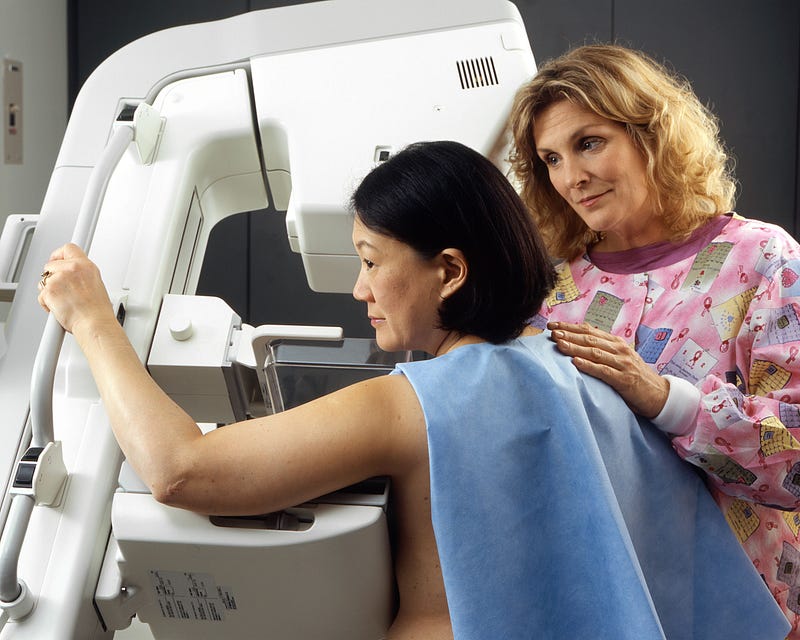
My doctor suggested a mammogram. That caused me to dig into the research.
I admit I wasn’t looking forward to doing a mammogram, so I was probably really looking for excuses not to do it. I was concerned about how I would be treated. Would I be treated as a human in such a gendered space? Would my femininity be acknowledged, or would I be humiliated? So I was looking for my excuse.
That got me thinking: what screenings do we need? I already knew some basics (I’ve heard something about hormones and breast cancer), but my curiosity took me down this rabbit hole. I was curious not just about breast cancer, and not just trans women, but all trans people. Do trans men need mammograms? How do surgeries figure into it? Does cervical cancer risk go down for people on hormones? What about prostate cancer?
I am Not a Doctor!
I’m not a doctor, so while I try to summarize guidelines and research here, ultimately you should have this conversation with your medical provider, who, unlike me, has had years of training!
Some Notes on Terminology
In presenting what I find, I’m going to use the medical words for our body parts. I understand that many in the trans community may use other words for these body parts, but in the interest of clarity I’m going to use the names an anatomy textbook might use. I’m going to use words like testicles, prostate, cervix, and breasts. I understand these words are highly gendered in common usage, and do not intend to convey any gendered meaning to them.
For instance, am I, a trans woman, a woman? Or a man? Am I male because I have XY (presumably) chromosomes? Am I female because I have breasts and typical female levels of hormones in my body? Regardless of how you answer these, it is clear that trans bodies are an exception — my breasts don’t disappear because someone says I’m a man or male! Nor does saying I’m female or a woman remove my prostate. Likewise for trans men — calling them a woman doesn’t eliminate the impact of testosterone (if they take testosterone) on their bodies nor does it guarantee they have a cervix. Non-binary people also present similar, but somewhat different, terminology challenges. Thus I will avoid using gendered terms, other than the names of body parts, for screenings (I.E. I won’t say “all men should be screened for prostate cancer”).
In some cases, I may mention AMAB and AFAB — Assigned Male At Birth or Assigned Female At Birth. Because bodies don’t always comply with expectations, I may talk about something relevant to AMAB people or AFAB people that might not be relevant to a specific AMAB or AFAB person. I.E. someone born without a womb or cervix, even if they were assigned female at birth, obviously would not need a cervical cancer screening. So when you see these terms, please understand I’m likely talking about typical AMAB or AFAB people, particularly if you know your body is atypical.
Some of the links I provide in this text will use gender language referring to people (for instance, a page about prostate cancer signs may talk about “men” although these signs will also apply to women with prostates).
Finally, this will be USA-centric. Other countries may have different screening guidelines.
Screen The Body Parts You Have
When searching for recommendations, it was clear that there are many unanswered questions still. But one thing everyone seems to agree on is that if you have a body part that is relevant to cancer screenings, you should screen it. That is:
- Nearly all AMAB people have a prostate, even if they’ve had genital surgeries. AFAB people, while they have a structure similar to a prostate, don’t have a prostate.
- AFAB people who have not had their cervix removed (it is sometimes, but not always, removed as part of a hystorectomy or transgender genital surgery) have a cervix, while AMAB people (even if they have had surgeries) do not.
- AMAB people who have not had vulvaplasty, vaginoplasty, or an orchiectomy will have testicles. AFAB people may have prosthetics, but do not have testicles.
- All AFAB and AMAB people have varying degrees of breast tissue unless the tissue has been completely removed. Top surgery for AFAB trans people may not remove all breast tissue, as some may be left and scuplted into a male chest (indeed cis men have breast tissue as well).
Of course this is complex, and there are a lot of caveats here. An AFAB person may or may not have a cervix. An AMAB person might or might not have testicles. Some bodies don’t conform even to these expectations. But, as a start, to figure out what screenings you need, you need to know what parts you have! I trust most of us know what our bodies came with and what was removed or installed as after-market equipment!
But, of course, there are still questions. Does a trans woman, who presumably has a prostate, but who takes estrogen and has very low testosterone levels still need a prostate exam? Do trans men need to worry about breast screenings? How does all this work?
Looking at the Parts
Prostate Cancer Screening (For AMAB People)
AMAB people may be at risk of prostate cancer, even if they’ve had “bottom surgery” or have been on hormones.
One common confusion with hormones is that testosterone blockers and estrogen often cause the prostate to atrophy and shrink, while one of the signs of prostate cancer is an enlarged prostate. However, these two actions are unrelated — shrinking the prostate won’t get rid of a cancer.
Another complicating factor is that reducing androgens (testosterone) is one way prostate cancer is treated, so trans women with low testosterone (either because of testosterone blockers, estradiol, or both) feel that they are already basically proactively treating any possibility of cancer. Some cancers are androgen-sensitive and reducing the androgen levels will slow the growth of the cancer. However, others are androgen-insensitive and this will not necessarily slow the growth. Some studies even suggest some prostate cancers grow faster with higher estrogen levels (and of course trans women on HRT may have higher estrogen levels than cis men). For some more information, see this article (“[A common treatment] is to drastically reduce the supply of androgens, but that leaves the estrogen-dependent cancer cells to grow and thrive.”).
So where does this leave AMAB trans people? If we’re on hormones or have had our gonads (testicles in our case) removed, we probably have a lower risk of at least some prostate cancers (particularly those who started HRT young). But it doesn’t remove all possibility of cancer.
UCSF recommends the same screenings for AMAB trans people as would be done in cis-gender men, but notes that if a PSA test is used for someone without gonads or on HRT, the level of concern should be lowered as the PSA levels will naturally be lower in such women. The American Cancer Society’s screening recommendations for cis gender men are here, but I’m not going to reproduce them here because they aren’t simple. Likewise, the US Preventative Services Task Force recommends this decision be taken on an individual level for cis gender men between 55 and 69 (a small benefit may exist during this range), and not done after then. However, people at higher risk, such as being African-American or having family members who have had prostate cancer should talk to their doctor about whether they should begin screening earlier. Of course if you have signs of possible prostate cancer (trouble urinating, frequent urination, blood in urine stream, pain in hips/back/chest,weakness/numbness in legs or feet, or loss of bladder or bowel control), you should talk to your doctor.
Two common ways prostate cancer is screened for are the PSA test and a digital exam. The PSA test is a blood test, although the doctor should consider following the UCSF recommendations (linked in the above paragraph) to lower the upper bound of what may be considered “normal” in a trans body, if you are on HRT or lack gonads. The digital exam is the traditional “finger wag” test doctors do (with their digit, AKA finger), typically through the rectum, looking for an enlarged prostate.
If a digital exam is performed, this should be done differently if the AMAB person has a vagina. Rather than attempting to feel the prostate through the rectum, which requires passing through the rectal wall, and then the vaginal walls twice, the doctor should insert their finger in the vagina and feel against the front wall of the vagina. It might be helpful to remind your doctor about where the prostate is located if they want to perform this exam rectally and you have a vagina! If you see a gynecologist for pelvic exams, they may check the prostate during the exam, assuming the gynecologist is competent with trans anatomy.
At least one study indicates a digital exam might not be as useful in trans women who have a vagina. One possible recommendation, if there is cause to suspect of a problem with the prostate, is a trans-vaginal ultrasound to image the prostate.
Cervical Cancer Screening (For AFAB People with a Cervix)
If you have a cervix, it is recommended that you be screened for cervical cancer periodically. I couldn’t find good evidence of cervical cancer incidence among trans people on HRT, although some older studies indicated that testosterone (some of which may be converted to estrogen in the body) may slightly increase the risk of some cervical cancers.
UCSF recommendations are that trans people with a cervix should be screened at the same frequency as cis women. The guidelines for cis women have changed recently and can be found here. For most trans men and non-binary people with cervixes, screening should be done between age 25 and 65, every 5 years, with a HPV test (or an HPV + Pap test).
The current recommendations suggest a primary HPV test rather than a Pap test. For trans people on HRT, this may be even more important as people using testosterone have a much higher rate of “inconclusive” Pap tests due to testosterone-related changes.
Testicular Cancer Screening (For AMAB People with Testicles)
Routine screening for testicle cancer is not recommended for cisgender men. There is no evidence I could find that trans people would be at higher risk or benefit from routine screening, although at least one paper (a case study on a trans woman who developed testicular cancer 15 months after starting HRT) postulates (without testing this theory) that estrogen may increase testicular cancer incidence in trans women. However, it’s also postulated that anti-androgens may lower this risk. It certainly does not seem to be common for trans AMAB people.
However, if you notice any changes with any body part, you should talk to your doctor.
Endometrial (Uterus) and Ovarian Cancer (For AFAB People with a Uterus and/or Ovaries)
Routine screening, in the absence of other issues, is not recommended. However, this same paper suggests that testosterone may theoretically increase the risk of endometrial cancer, but there is no data that supports this.
If you have abnormal and persistent bleeding (not related to HRT or normal menstruation), bloating, nausea, or indigestion, you should talk to your doctor.
Vaginal Cancer (For both AFAB and AMAB People with Vaginas)
For AFAB people (cis or trans), this is not routinely screened for. However, these types of cancers may be noticed during pelvic exams or a cervical cancer test. I could find no evidence of higher or lower incidence of vaginal cancer in AFAB people.
For AMAB people, the vagina may develop similar cancers that might develop on the body part that was used to create the vagina. However, no studies have determined the frequency of these cancers, but there are published reports of trans women with developing cancer in the vagina. For instance, if your vagina was created using penile or scrotal skin, you can develop a skin cancer. If it was created using the colon, it can develop a colon cancer. For this reason, the paper linked above recommends regular gynecological exams for trans women and cytologic smear testing every 3 years between age 21 and 70. UCSF recommends annual pelvic exams, but does not recommend smear tests.
Breast Cancer (For both AFAB and AMAB)
This brings us back to my initial question: should I get screened for breast cancer?
First, we know both trans men and women can get breast cancer, even if we’ve had surgeries and hormones.
For AFAB people, if you have breast tissue, consider following the recommendations that are also used for cis women. Generally these recommendations are for mammograms starting at age 50, although if you know you have a higher risk you should talk to your doctor. There are guidelines that suggest doing this mammograms annually once you reach 50, while other guidelines suggest every other year.
Like other cancers that are influenced by estrogen, it may be possible that people taking testosterone will see some of that testosterone converted into estrogen which increases their risk. However, a study found that masculine hormones may be associated with lower breast cancer risk, so the jury is still out on this (one concern is that at least some men in this study would have had chest surgery, which also will lower risk, but not eliminate it).
For AMAB people, if you use HRT, you should also follow the cis woman guidelines starting at age 50, unless you’ve been on HRT for less than five years and don’t have other risk factors (in which case you can wait for your first mammogram until you’ve been on HRT for five years). That said, there may be medical reasons to have a mammogram before then.
One concern some AMAB people may have is fear that it may be difficult to perform a mammogram on their breasts due to limited growth. However, mammograms can be performed on cis men (and sometimes are), so this shouldn’t scare you from having an exam! Likewise, mammograms are also done for people with breast implants. The implants should pose no difficulty for the technician. If you are pursuing breast augmentation, you may also want to get a baseline mammogram before the implants are placed. Talk to your GP or surgeon about this to see if it applies.
For everyone, AMAB and AFAB, regardless of whether you are taking HRT or have had surgeries, if you notice changes with your breasts or have unexplained nipple discharge, you should talk to your doctor.
Other Screenings (EVERYONE!)
Of course don’t neglect other screenings, such as colon cancer screenings or routine physical exams. Being trans doesn’t exempt us from other health problems.
So, What Did I Do?
While I am not yet 50, my doctor suggests starting mammograms for people after age 40 with breasts. In addition, due to another factor, she suggested that a mammogram might be appropriate at this time in my life. That fits the guidelines I found while researching this.
So…
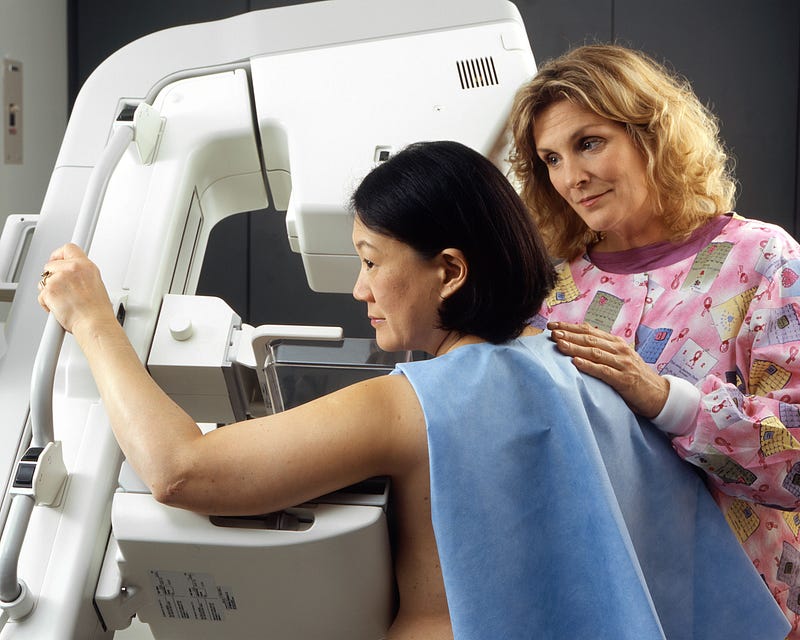
Yep, I did the mammogram. It was a 15 minute appointment, some social awkwardness, and some physical weirdness (those techs can find breast tissue you never knew you had). I’m open and comfortable as a trans woman, so I just told them that I was trans when they asked questions that didn’t apply (such as, “When did you start menstruating?”), but even with this awkwardness, it was an easy process.
I also do the other screenings that are recommended. It can be hard to find medical providers that are comfortable and competent at treating trans people. It can also be hard to be examined in ways that are atypical for people of your gender. However, my transition is about loving myself and living a full life. I’m going to do everything I can to continue loving myself and to continue living that full life! I hope you will too.






 Gendered Thoughts