We need to eat. This article is for people that are finding that hard. I’ve been there, and I can give some suggestions (that said, I’m not a doctor, therapist, or nutritionist, so take my advice with appropriate caution). This advice is not for people who can consistently prepare and consume healthy food for themselves–and I hope they recognize that their abilities to do this are not universal, nor does this make them a morally better person than someone who can’t. Not being able to prepare and eat food regularly is not a moral failing, laziness, or ignorance.
We are living through some awful times right now. As a trans person with “AuDHD” (autistic+ADHD), I am exhausted from the hate right now. Between executive orders calling my gender a fraud and a health department that thinks work camps are the solution to my type of brain, I don’t have a ton of energy. I suspect I’m not the only one. I have some support right now (including a wonderful spouse who make sure I eat!), but I didn’t always, and due to recent social media discourse on the evils of ordering food delivery, I worry about people in the situation I was in during my twenties–people who don’t have the “spoons” to manage to take in enough calories to stay healthy, due to life demands or burnout.
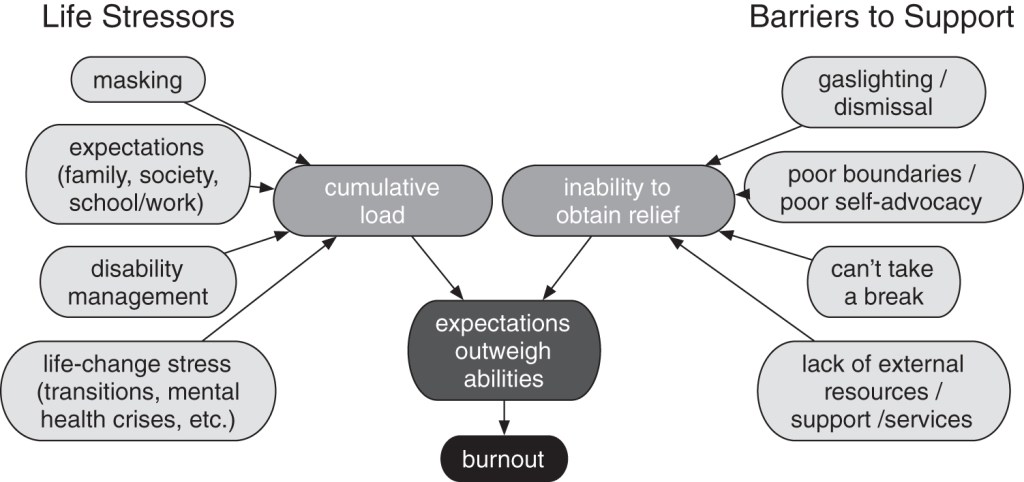
When I was in my 20s (I’m [a bit] older now!), I was literally wasting away. I had 4% body fat at the time, which is unhealthy for most people (I was no body builder!). I lost the padding on the bottom of my feet and I could smell my body consuming itself. How did I get there? It was autistic burnout. I had a ton of expectations (work, school, “independent” living, etc) upon myself, but few resources (I didn’t have much money and nobody in my life making sure I was eating or, even better, helping me eat). The number of steps required to prepare food was daunting, especially when you are out of spoons: meal planning, shopping (a social/sensory assault), preparing ingredients, cooking, eating, and cleanup. That was too much.
Of course people around me saw someone successfully employed in a (low paid) computer programming job, and assumed that I must be able to manage things like eating. People tell me I quickly grasp academic ideas, and I can create intricate computer software and networks. But eating was hard. In part, I was exhausted from the work and school I was doing at the time, but also I’m autistic. And that means my profile of strengths and weaknesses doesn’t look like that of a neurotypical. My strengths/weaknesses aren’t those of an imaginary neurotypical, just all adjusted upward or downward (I’m not worse than average at everything nor am I better than average at everything). I have some intense strengths (I feel I’m really good at what I do for a living) and some intense difficulties (such as appearing even sort of typical in a “mixer” gathering!). One of those difficulties is feeding myself, because of the number of steps involved, particularly when already in burnout.
Fortunately, I did have some friends that helped me out. One couple often invited me over to eat food with them. That helped a ton! Other friends, particularly those with disabilities, suggested things that helped me manage to start eating enough. This included:
- A cookbook for intellectually disabled people was a blessing. While I am not intellectually disabled, I do share some of the same difficulties as intellectually disabled people when it comes to cooking. The cookbook I was recommended (sadly I don’t have the book anymore and I don’t remember the title) had a selection of mostly-easy recipes. Each recipe clearly listed what you needed to prepare it (both the food ingredients and the cooking equipment required). The recipes had a difficulty level associated with them, so if I was feeling adventurous and had energy, maybe I would try a “3” or “4”. But if I was exhausted and barely able to do anything, it was going to be a “1”. The recipes were very straight-forward in a way most recipe books are not: the steps were extremely detailed and clear. And the foods were typically simpler than you find in most recipe books. 99% of cookbooks are crap for low-on-spoons people, and even more so for people who have executive functioning disabilities.
- I needed to get past some ableist notions about what is “good” or “normal” food, along with my own desire for perfection. Sure, it would be ideal to grow my own food and create meals from scratch. But that’s never going to happen for me. It’s okay to eat convenience foods or fast food, when the other option is not eating. “Unhealthy” or “harmful” foods are better than not eating. It’s also okay to eat the same thing every day for a month, if that’s all you can do.
- Cooking for others sometimes helped. In addition to times when friends invited me over to eat, I’d invite them over to eat. Because this was tied to something I had a strong desire to do (spend time with friends), it was a lot easier for me to cook in that situation. I still did simple stuff–spaghetti, tacos, etc, but it was more than I would be willing to do just for myself.
- I embraced autistic desires for sameness and rules. I set a rule that I would eat three times a day. I didn’t care what I ate, so long as I ate something each time. I still do this today. This is particularly important if you, like me, have poor interoception (sensing/understanding body states, like hunger).
- Not worrying about gaining weight. There is a lot of messages out there that thinness is better than being fat, but if you’re literally starving, that is worse than being fat. For me, I made an agreement with myself: I will not ever diet. I know what it is like to be wasting away. I don’t want that again.
- Having convenience foods handy. Sometimes you’re not going to be able to prepare anything properly. That is okay! If you have the money to be able to do it, use a burrito taxi (Doordash, etc). Yes, gig economy exploits workers, so tip the driver, but you need to eat, and nobody should be shaming you for eating. But Doordash can get expensive! So one thing that can help is have ready-to-eat foods handy. Some examples of things I would stock at the time (bonus points if they had a long shelf life and wouldn’t rot if I forgot them for a few weeks):
- Milk and cereal (tip: ultrapasturized milk might sometimes cost more, but typically has a longer shelf life — compare milk brands/types and look at their expiration dates)
- Jerky/dried meats (a source of protein, which a lot of ready-to-eat foods don’t have)
- Frozen microwavable food, like frozen burritos
- Fruit (note that the shelf life might be limited for these, so this might not work well if you don’t really like the fruit you buy!). Tip: Apple + yogurt can be a good convenience food that doesn’t take much work if you have a tool to core the apple.
- Ensure or other nutrition drinks. These taste like ass (I imagine), but it’s better to get some nutrition than not getting nutrition.
- Cheeses
- Again, ignore anyone’s shaming. It’s fine to adjust your meals and food to be more healthy, but that’s not something you should do when you are low on spoons. Eating anything is better than not eating, and adding requirements to food before you eat it can make it hard to eat regularly. Ya, your doctor might tell you to eat better, as might your parents or friends. If you are finding a way to eat when you don’t have the spoons for hardly anything at all, tell them to go to hell.
- Ask yourself what your energy level is when you want to eat. Is it really high? Maybe you should go shopping and then make a fancy meal! Is it low? Apple slices with yogurt might be the best you can do. Worry about eating better when you have high energy levels. Sure, eating well helps you feel good, but not eating at all will make you feel far worse than eating “crap” will make you feel.
- Finally, and this one sadly came later, a therapist can help, particularly one that has experience with neurodivergence or chronic illness. They can help you find things you can do! It also lowered demands (one of the parts of burnout) when I was able to address other things, like my gender.
There is a lot of pressure to “learn to cook” placed on people who have the problems I had. But this problem isn’t one of laziness or lack of motivation. It’s not a moral failing to have limited spoons to prepare meals. Don’t let someone shame you for finding a way to eat.
And, if you are reading this, have you eaten something within the last few hours? If not, go do that. You have my permission to eat food right now that isn’t perfect.



 Gendered Thoughts